GRAND VELAS SPECIALITY COCKTAIL

Talk about perfectionism; GRAND VELAS ALL SUITES & SPA RESORT in Nuevo Vallarta, Mexico, does everything right. Each of the resort’s 267 well-decorated roomy suites opens to a private terrace with an extensive ocean view.  Each of the four upscale, on-property restaurants serves a different well-loved cuisine (Italian, French, Mexican and International), covering a gamut of guests’ taste preferences. And the Grand Velas spa, which authorities consider the hands down finest on Mexico’s Pacific Coast, offers 80 different treatments to polish, pamper and please in a serene and peaceful setting. No doubt about it, this exclusive, all-inclusive sees to the details—no matter how large or how small.

Which brings us to the bar menu.

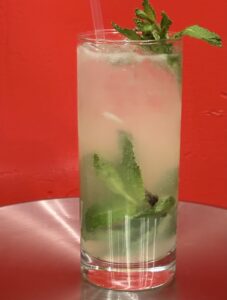
Some may consider it a coincidence, but I know Grand Velas is so perfection focused that the head bartender probably created the house specialty cocktail to color-coordinate with the garden plants around the resort’s various bars.

The resort's lobby and swim-up bars.

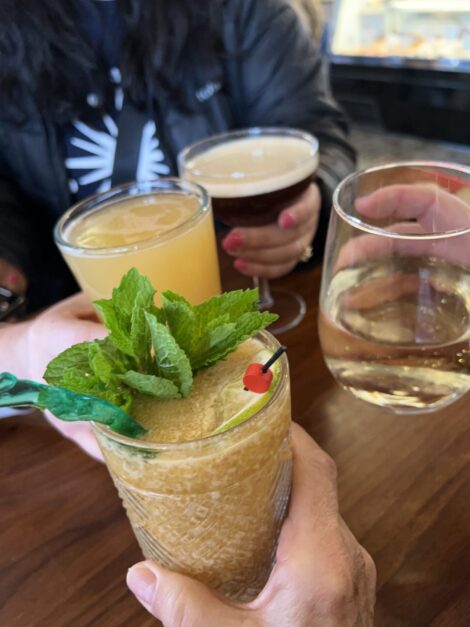
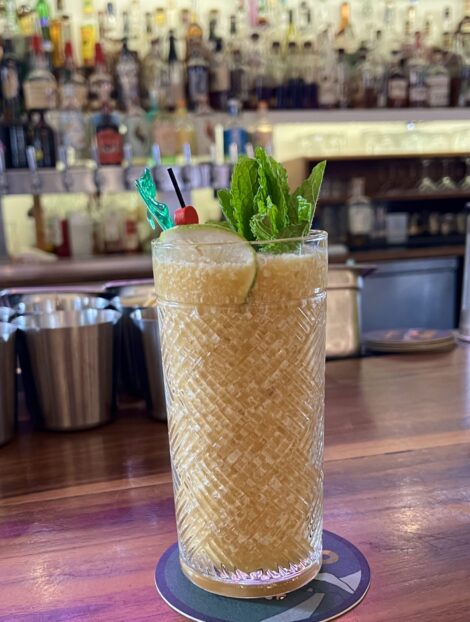
The Grand Velas Special, a drink that tastes of vacation with an easy-going refreshing charm, matches not only the bright green, orange and yellow crotons scattered around the grounds and backing the swim-up bar, but also the broad leaf water lilies that grace a garden pool in front of the lobby bar. Pretty perfect if you ask me.

THE GRAND VELAS SPECIAL  

A generous splash of green licor de melon (a melon liqueur such as Midori)

1/2 cup fresh orange juice

1/2 cup pineapple juice

1-1/2 ounces ron Malibu (coconut rum)

Put licor de melon in a tall glass. Add orange and pineapple juice. Top with rum. Gently fill glass with ice. Don’t stir. Enjoy.

Bookmark and Share

DIJON RESTAURANTS

WHERE TO EAT IN DIJON, FRANCE

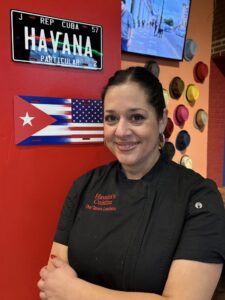
Sophie Jugie

Sophie Jugie heads the glorious Musée des Beaux-Arts in Dijon, France. As director, she not only oversees collections and operations, but also serves as the face of the museum, traveling, entertaining, and interacting with the leaders of her museum community as well as the international art community in Europe and other parts of the world.

One aspect of Sophie’s job entails dining with dignitaries visiting Dijon. Being a woman of highly refined and educated taste, Sophie knows restaurants as well as art and knows the perfect places to take visitors.

Eager for the inside scoop, I asked Sophie for a list of restaurants that she frequents with dignitaries and then requested  that she broaden the list to contain some of her favorite places that give an overview of the good food found in Dijon.

Ever generous, Sophie replied with the following:

SOPHIE JUGIE’S FAVORITE DIJON RESTAURANTS

The Place de la Liberation with two good restaurants: Le Cafe Gourmand and Le Pre aux Clercs

The most beautiful place in Dijon is obviously the Place de la Libération, the former Place Royale, in front of the Palace of the Dukes and of the States-General of Burgundy where the Musée des Beaux-Arts is located. Here are two favorite restaurants.

For an informal lunch, I like Le Café Gourmand (9 place de la Libération, 03 80 36 87 51) for its original and often renewed menus and its terrace. This is a perfect place to me.

Sitting next door is the famous Le Pré aux Clercs (13 place de la Libération, 03 80 38 05 05) where one of the most talented chefs of Dijon, Jean-Pierre Billoux, is cooking. Among the many delights of this one-Michelin starred restaurant, I recommend the spectacular “quenelles d’ecrevisse.”

It wouldn’t be fair not to mention the other Michelin starred chefs of Dijon producing inspired and rarefied cooking: Stéphane Derbord of Restaurant Stéphane Derbord (10 place Wilson, 03 80 67 74 64)  and William Frachot at Hostellerie du Chapeau Rouge (5 rue Michelet, 03 80 50 88 88).

Jean-Pierre Billoux

Jean-Pierre Billoux also owns a typical bistrot, Le Bistrot des Halles, (8 rue Bannelier, 09 80 49 94 15) on the market, with simple but genuine dishes. Also around the market, which is very animated Tuesdays, Fridays and Saturdays, are a number of other good restaurants. I like Lilouhane (10 rue Quentin, 03 80 30 59 37) for its seafood and DZ’envies (12 rue Odebert, 03 80 50 09 26) where the talented David Zuddas produces original cooking in a design environment.

In other charming streets of Dijon, you will find a large choice of nice places.

Courtyard of La Maison Milliere

Behind the wonderful church of Notre Dame, La Maison Milliere (10 rue de la Chouette, 03 80 30 99 99) offers en trompe L’oeil garden courtyard in which to enjoy a pleasant meal.

In the animated rue de l’Amiral Roussin, not far or the Renaissance Palais de Justice, is my favorite Italian restaurant, Osteria Enoteca Italiana (32 rue Amiral Roussin, 03 80 50 07 36)—vera cucina Italiana, good Italian wines.

The fried Camemberts of Le Petit Roi de la Lune (28 rue Amiral Roussin, 03 80 49 89 93) is a tasting must.

Le Petit Roi de la Lune sits next door to La Causerie des Mondes

And next door you will find a  serene place for a cup of tea, a salad and a dessert at La Causerie des Mondes. Both restaurants are in medieval half timbered houses.

The Place Emile Zola reminds me of the south of France with its big plane-trees and fountain and there I recommend a funny vegetarian restaurant Les Pieds Bleus (13 place Emile Zola, 03 80 50 06 66).

Recently, in the nearby rue Berbisey, also full of bars and restaurants, I discovered Le Piano qui Fume (36 rue Berbisey, 03 80 30 35 45) with an astonishing delicious and refined menu at a very mild price.

Bookmark and Share

CATALAN TOMATO BREAD

Maria-Lluisa Albacar, the foreign relations manager for Turisme de Barcelona, is an avid foodie, so when she offered to take a bunch of food writers to show off some of her favorite Barcelona restaurants, I was first in line.

My favorite of Maria-Lluisa’s favorite restaurants is Casa Leopoldo, a three-generation-owned oldie in Barcelona’s El Raval district. A leftover from when the neighborhood enjoyed more respect, Casa Leopoldo serves terrific traditional dishes in a setting enhanced by colorful tile walls, dark wood beam ceilings and numerous photographs of famous bullfighters who frequented the place.

As is the Spanish tradition, Maria-Lluisa ordered a generous number of her favorite dishes for us to try and my favorite of her favorites was a crusty, flavor-packed tomato bread that was placed on the table at the start of the meal.

According to Maria-Lluisa pa amb tomaquet (literally bread with tomato in Catalan) is not only one of the simplest Spanish dishes to make, but also one of the most beloved specialties in the whole of Catalonia. She said that sometimes locals top the bread with cheese, sausage or ham, but her favorite way to eat it is warm, crunchy and tasting like fresh-from-the-garden tomatoes—just as it was served at Casa Leopoldo.

CASA LEOPOLDO’S TOMATO BREAD

Cut a large round loaf of good rustic white bread, horizontally, into thick slices. Lightly toast the bread slices. While the slices are hot from the toasting, rub each with the cut side of a halved garlic clove. Halve one or two large, perfectly ripe tomatoes and press out the seeds. Rub the cut tomatoes over each bread slice. Drizzle a very good extra virgin olive oil over the bread and sprinkle with salt. Cut slices into serving size pieces and serve immediately.

Bookmark and Share

DOOR COUNTY, WISCONSIN

There are a number of reasons to vacation in Door County, Wisconsin. Consider:

2,000,000 people visit Door County per year, yet this peninsula, with Green Bay on the west and Lake Michigan to the east and north, remains gentle, peaceful, somewhat rural and very nature-focused.

20,000 or more acres of Door County are devoted to protected park and recreational areas, providing plentiful opportunity for outdoor fun.

300 miles of shoreline makes the cup runneth over with water sports and water-based activities.

70 miles-long, the Peninsula is easy to navigate by car.

30 plus beaches delight visitors and locals alike; a few even welcome the canine crowd.

11 villages line the waterfront and each has its own personality as reflected in shops, galleries, restaurants, accommodation choices and fun venues to enjoy evening entertainments.

4 seasons bring many reasons to visit: spring for the cherry blossoms; summer for mild temperatures and every kind of outdoor fun; fall to see gorgeous foliage; and winter for peace, quiet, ice fishing, snowshoeing and cross-country skiing.

And last but not-at-all least,

2 vacation necessities —bed and breakfast— shine  in Door County.

BED

LODGINGS AT PIONEER LANE

Location in the heart of Ephraim village, itself in the heart of Door County, accounts for some of the Lodgings at Pioneer Lane’s draw. Ephraim makes a great base for exploring the Peninsula, and the charming white clapboard houses that hold the inn’s seven rooms are a short walk from Ephraim’s restaurants, shops and the shoreline (the most accessible shoreline in all of Door County).

But location isn’t all. Owners Hugh and Alicia Mulliken structured their inn to be heavy on both style and user-friendly substance. Although each room is unique, most are luxuriously spacious and all are filled with comforts such as whirlpool tubs (big enough for two), air conditioning (but you probably won’t need it as night air is so fresh and cooling), large closets, good beds with luxury linens (comfy to the max), TVs and free WiFi. Some rooms come with a fireplace (especially cozy in winter), while others sport a balcony or front porch area for summer lounging. Each room is individually decorated.

I stayed in the sleek and contemporary Sea Chest Room, which felt more like a small apartment than a hotel space, having a large living room and a kitchenette. Décor leaned to contemporary, with clean-cut lines and special design features that included lighting fixtures that are both form and function savvy and artist made wood furniture. Yacht-glossy wood floors, a blue and white color scheme and boat-related decorations supported the room’s nautical theme.

Simple, sophisticated, spacious, comfortable, convenient, the Lodgings has it all. Well, maybe not all. The Mullikens don’t serve breakfast—a plus in my book as I love  restaurant breakfasts and Door County had some winners to experience. Read on:

BREAKFAST

THE WHITE GULL INN RESTAURANT

Encouraged by Good Morning America’s claims that the White Gull Inn Restaurant in Fish Creek serves one of the best breakfasts in all of America, I tried a bit of everything on the menu: omelettes, corned beef hash, buttermilk pancakes, Swedish limpa bread toast and cherry-studded coffee cake included.  Yes, I know I’m taking a chance on hell for the gluttony sin, but who cares in the quest to find the best-breakfast-title claimer, which turned out to be a divine Door County Cherry Stuffed French Toast.

This awesomely rich, but totally worth-the-calories French toast is loaded with cream cheese and local Montmorency cherries. Andy Coulson, White Gull Inn’s innkeeper, gave me the following recipe. I didn’t retest it for you (was afraid I might eat all six servings), but if the recipe replicates what was served, and I am sure it will, you are in for a bit of cherry heaven.

DOOR COUNTY CHERRY-STUFFED FRENCH TOAST

Yield: 6 servings

1 loaf unsliced egg bread

2 (8-ounce) packages cream cheese, room temperature

2 cups frozen tart Montmorency cherries, thawed and divided (see note)

3 eggs

1/2 cup milk

Oil for grilling

Cinnamon

Powdered sugar

Butter

Maple syrup

Trim ends from loaf and cut bread into six 1.5-inch thick slices. Make a cut three-quarters down the middle of each slice. (Bread will appear to have two separate slices, but will be joined together at bottom.) Set aside.

In a small bowl, mix together cream cheese and one cup of the cherries. Spread approximately 1/6 of the mixture into the pocket of each slice of bread.  Gently press slices together, evenly distributing filling.

In a separate bowl, beat eggs and milk together. Dip stuffed slices into egg mixture and coat all sides. Immediately place on a lightly oiled griddle (or in a frying pan) and sprinkle with cinnamon. Cook over medium heat until golden brown, turning to cook second side.

Remove cooked slices from griddle and place on a cutting board. Gently halve each piece diagonally, forming two triangles. Arrange two triangles on individual plates. Sprinkle with powdered sugar and remaining cherries.

Serve with butter and maple syrup.

Note: The White Gull Inn uses frozen Montmorency cherries, which they buy from Seaquist Orchards, the largest growers and processors of cherries in Wisconsin. Seaquist’s owner Kristin Seaquist said if frozen cherries are not available, to use fresh or canned.  (Canned Montmorency cherries are available by mail order: click here).

Bookmark and Share

FRESH PASTA

If they can do it, you can do it.

Making fresh pasta is child’s play, especially if you have a pasta machine to do the rolling. The instructions for making the dough and using the machine may sound complicated at first, but after a little practice, nothing could be easier. So why are you waiting?  Set up the machine and let the good times roll.

HOW TO MAKE BASIC PASTA DOUGH

The following recipe will make about two servings of pasta. The recipe may be doubled or tripled.

1 cup all-purpose unbleached flour

1 extra large egg

1 teaspoon olive oil

Pinch of salt

Mound flour on a wooden pasta board or other flat surface. Make hollow in flour so it looks like a volcano.Break egg into the hollow. Top with oil. Sprinkle with salt.

(Now comes the hard part: you need to keep the egg inside the flour mound when you mix the dough and not let the egg escape through the sides of the flour and run over the flat surface. The way you hold the fork isimportant.) Pick up a fork and hold it with the tines parallel with the flat surface, not pointing down. Keeping the fork flat (parallel to the surface), begin making circles inside the mound and gently whip the eggs and oil until white and yolk are blended. (You could support the side of the flour mound with your free hand to help keep the egg in the mound.) With the same flat circular motion, very slowly start bringing flour from the side of the mound into the egg mixture. Continue slowly and carefully incorporating flour from sides and bottom of mound into the eggs until you have a sticky dough. Then put the fork down and gently knead the dough with your hand, incorporating enough flour to make a soft, but not sticky dough. Gather dough into a ball. You will probably not have used all of the flour in the mound. Pass remaining flour through a strainer to remove all lumps (throw lumps away). Use strained flour for rolling dough.

TO ROLL PASTA DOUGH ON A MACHINE

(Cut dough in half. If the dough has been made with more than one egg, cut it into as many portions as eggs used. Roll each portion of dough separately.)

A little wheel at the side of the machine adjusts the roller size. Put rollers on the most open setting. Turning handle of machine, pass lump of dough through rollers.

Fold rolled dough into thirds (like a letter). Press gently to flatten the dough rectangle. Lightly sprinkle dough rectangle with flour. Put one of the narrow ends of the folded rectangle into the machine and repeat the rolling, folding and flouring.  Repeat about eight more times, or until dough is very smooth.

Move the roller wheel notch one  number, putting the rollers a little closer together. Roll dough without folding. Sprinkle rolled dough with a little flour.

Repeat rolling the dough, moving the rollers one number closer after each rolling, and not folding, until the dough is as thin as you want it. (The sheet of dough will get longer and longer as you roll and you may need some help handling it. I don’t know if a purist would ever do this, but beginners can cut the long sheet in sections to make handling a little easier. It is important to remember to never squeeze a long sheet of dough in your fist, but let it hang over your open hand or on the back of your hand to move it.) After the last rolling, gently pull the pasta to its full length and set on lightly floured dishtowels to “dry” for about 10 minutes before cutting.

TO CUT FRESH PASTA

Pass the dough through the pasta machine’s cutting “teeth” to cut into shapes offered by the machine, or cut with a sharp knife into shapes not available on the machine. Put the cut pasta on floured dishtowels and set aside for about 10 minutes before cooking.

TO COOK FRESH PASTA

Put a lot of water into a large pot. Set the pot over high heat. Bring the water to a full boil. Put the pasta in the boiling water and cook until tender, 15 to 30 seconds for very thin fresh pasta and up to a minute for thicker. Drain pasta in a colander. The pasta is ready to add sauce and eat.

Bookmark and Share

FOURTH OF JULY SPIRITS

RED WHITE AND BLUE

TOASTING FOR THE

FOURTH OF JULY


FRENCH CANADIAN KISS

From the bar in Panache restaurant at the Auberge Saint-Antoine, Quebec City, Canada

Combine in a cocktail shaker:

1-1/2 ounce pineapple juice

1 ounce vanilla Smirnoff vodka

1/2 ounce Ricaneux Framboise or raspberry liqueur

Add ice. Shake. Pour into a martini glass.

Garnish with fresh raspberries and cherries.

SOURSOP MARTINI

From Rosewood Little Dix Bay, Virgin Gorda, British Virgin Islands

Combine in a cocktail shaker:

1-1/2 ounces Kettle One Vodka

2 ounces soursop juice (see note)

Ice

Shake and strain into a chilled martini glass.

Note: Soursop (also know as guanabana) is a fruit native to the Caribbean and parts of South America. Wikipedia says, “Its flavor is described as a combination of strawberry and pineapple with sour citrus flavor notes contrasting with an underlying creamy flavor reminiscent of coconut or banana.” Soursop juice may be available in canned form from a specialized supermarket.

SIAM@SIAM COCKTAIL

From Siam @ Siam Design Hotel, Bangkok, Thailand

Combine in a tall glass:

1-1/2  ounces Bacardi rum

1 ounce Blue Curacao liqueur

1-1/2 ounces fresh coconut juice

1-1/2 ounces pineapple juice

1/2 ounce sweet and sour mix

Add ice and stir.

Garnish with a slice of lemon.

Bookmark and Share

KEY LIME PIE

“We met in Miami when I was barely into adolescence. I fell in love at first sight. Although I was tender and impressionable at the time, and am now much older and shamefully experienced, my love remains steadfast and unrelenting. Granted the object of my affection is as rich as sin, and rich is a powerful aphrodisiac, but rich isn’t all. My love is also super smooth, exceedingly sensual and…well…how should I say it…completely satisfying. My breath quickens and heart pumps a tad faster at the very name: Key Lime Pie.I am obsessed. I am made hungry where most I’m satisfied. Once is never enough. All the clichés apply.

Fueled by passion, I became a stalker, or perhaps it’s nicer to say I went on a pie pilgrimage. In a secret effort to curb my promiscuous tendencies to adore each and every wedge that passes my plate, I headed to Key lime pie Mecca, the Florida Keys, to see if I could find an ultimate, peak-pie experience.

Everyone knows that this luscious substance, simply made with lime juice and sweetened condensed milk, was born in the Keys, but no one knows exactly when or where. Guesses are that Key limes, natives of Southeast Asia, came to the islands with the Spanish in the 1500s. It wasn’t until 1856, when Gail Borden created canned sweetened condensed milk, that a marriage of the ingredients was even possible.

I like the story that sailors were the matchmakers. Sailors cruising through the Keys carried supplies that didn’t spoil, such as hardtack and canned milk. They also picked up limes and eggs, which were readily available on shore. Can’t you just envision some galley cook trying to soften hardtack to an edible stage by crushing the rock-like crackers and soaking the crumbs in liquids at hand (lime juice, canned milk, an egg or two). Imagine the surprise when the acid in the lime “cooked” the proteins in the egg and milk, forming custard without the need for heat. What could be better than a delicious concoction, easily made from available ingredients, requiring no heat to cook.

Necessity may have been he mother of Key lime pie, but taste was the father and their progeny flourished. Sailors took the recipe to shore and locals took it to heart, so the pie was an established favorite even before the first written recipe appeared in the 1930s.

As with all marriages, age brought change. Graham crackers replaced hardtack and traditional pie crustsometimes replaced the graham crumbs. The original pies probably went topless, but at some point a thrifty cook wanting to use egg whites left over from the yolks in the custard, added a layer of meringue. Whipped cream joined the topping choices when fresh milk came to the Keys with the railroad in 1912. The greatest change however, and a shocking travesty to purists, occurred when folks began making Key lime pie, without Key limes.

The real Key lime is a small thing, about the size of a ping-pong ball, with yellowish-green skin. Tart and juicy with distinctive aroma and flavor, Key limes grow on trees with thorny branches. When a hurricane devastated the Key’s lime crop in 1926, most growers replaced their plantations with Persian limes, which are easier to pick and transport. The larger, deep green Persian limes are found in most supermarkets today.

The salmonella scare brought recent change. Cooks, worried about raw eggs, began to heat the pies instead of letting limes do the work.

Surprisingly for a dish made with so few ingredients, no two pies are the same— and I should know, having sampled and savored pies from one end of the Keys to the other.

What did I discover?

As long as the base pie is made of lime juice and sweetened condensed milk, anything goes. Well, practically anything. Floridians insist that the pie be made of Key limes (although it is difficult for most cooks to find this baby) and everyone agrees it is forbidden to use food color to tint the custard green.

As to my preferences, as much as I would like to report that I developed a sense of discrimination, finding a sole, soul-mate pie, I have to confess that after trying the tall, short, thin, plump, creative, traditional, unadorned and accessorized-to-the max pies—I love them all.

On the other hand, faced with leaving the Keys and separating from my pie promiscuity, I did pick up the recipe for Little Palm Island’s cashew crusted, egg-yolk-rich, whipped-cream-drenched specialty. I’m going to take it home to meet the folks, as this is a happily-ever-after pie if there ever was one.

Little Palm Island's Key Lime Pie

LITTLE PALM ISLAND’S

KEY LIME PIE

2 cups very finely chopped or ground cashews

1 cup graham cracker crumbs

1/2 cup plus 2 tablespoons sugar, divided

3/4 cup melted butter

Shortening to grease pan

3 cups sweetened condensed milk

9 egg yolks

1–1/2 cups Key lime juice

2 cups heavy cream

Finely grated peel of one orange

Make crust: Combine cashews, crumbs and 1/2 cup sugar in a mixing bowl. Add butter and stir until well blended. Lightly grease a 9- or 10-inch springform pan and pat crumb mixture evenly and firmly over bottom. Bake in a preheated 350-degree oven until light golden brown, 8 to 10 minutes. Cool.

Make custard filling: In a large mixing bowl, beat milk and egg yolks until well blended. Slowly beat in lime juice. Pour mixture over prebaked crust. Bake in a preheated 300-degree oven until custard is set in center, 20 to 25 minutes. Set on a rack to cool completely.

Make topping: Put cream, orange peel and 2 tablespoons sugar in a mixing bowl and beat until stiff. Spread whipped cream over top of pie. Refrigerate until fully set, at least 1 hour. Cut around edge with a sharp knife and remove ring before serving.

Yield: 8 to 10 servings.

Check www.fla-keys.com for more about the Forida Keys.

Bookmark and Share

ORCHID CURE

ORCHIDS AND CINNAMON

For fellow orchid addicts:  After finding large black spots on two of my favorite phalaenopsis, I immediately called the local orchid hospital. The doc on call suggested a two-step cure. “First,” he said, “cut the spot from the plant, cutting with a sterilized tool, well below the spot, back to where the tissue is healthy.”

Cutting off the black spot is nothing new, but the next step was surprising, especially as this sick-orchid hot line is connected to a nursery selling as many orchid pharmaceuticals as the local Walgreens sells people pills and the advice did nothing to promote sales.

“Sprinkle ground cinnamon on the cut and on the stem base of the plant,” he said. “Cinnamon is the best anti-bacterial, anti-fungal around.”

Goodbye lethal chemicals. Hello cookie-scented healthy plants. Thank you orchid whisperer.

Bookmark and Share

BACON CORNBREAD MUFFINS

Just about the best corn muffin recipe in my collection comes from Sea Island Resorts, a genteel and posh vacationing outpost located on a private island off Southeast Georgia’s Atlantic coast.

Sea Island has a habit of winning the hospitality industry’s top awards, racking up five stars for luxurious accommodations, world-famous golf and wonderful Southern-accented food.

Although the resort’s dining venues include the fancy formal, casual clubby and beachside basic, all of the restaurants serve bacon-packed cornbread muffins on request.

“We don’t dare stop making these muffins,” said one chef,  “generations of guests returning to Sea Island year after year wouldn’t stand for it.”

The chef also said that the muffins are best if the batter is made in advance and refrigerated about 24 hours before baking. This advance prep works to the advantage of busy home cooks who can, with almost no effort, serve home-made hot muffins in a variety of situations including breakfast for houseguests, informal family dinners and dinner-party extravaganzas.

BACON CORNBREAD MUFFINS Photo by Katherine Bish


SEA ISLAND RESORT’S

BACON CORNBREAD MUFFINS

Yield: 24 muffins

1 cup unsalted butter

1/2 cup granulated sugar

3 eggs

1/4 cup (2 to 3 strips) cooked crumbled bacon

1 (14-3/4 ounces) can creamed corn

1 cup shredded Cheddar cheese

1-1/2 cups yellow cornmeal

1-1/4 cups bread flour

3 tablespoons baking powder

1-1/2 teaspoons salt

2 tablespoons milk

Shortening to grease muffin cups

Cream butter and sugar. Add eggs, one at a time, beating after each addition. Add remaining ingredients and mix until well incorporated. Refrigerate batter in a covered container for at least 24 hours.

When ready to bake, preheat oven to 400°F.  Generously grease 24 (2-1/2 inch) muffin cups. Spoon batter into cups and bake until muffins are set and golden brown, about 18 minutes. Serve muffins while they are warm.

Bookmark and Share

ROME RESTAURANTS

Elizabeth Helman Minchilli Picks:

Ten Best Restaurants in Rome

Elizabeth Helman Minchilli

Magazines, guidebooks, newspapers and the Internet all tout the best places to eat in Rome, but I have a better guide. I have direct access to Elizabeth Helman Minchilli, and she has the inside scoop.

Elizabeth leads the charmed Italian life. She was born in the United States, but has lived in Italy for 20 years, dividing  her time between a rooftop apartment in Rome, and a villa in Umbria, where I’ve had the pleasure of staying. (Five bedrooms, olive grove, 40 varieties of roses and a pool make the villa my idea of heaven. Since she rents it out, you can visit heaven too.)  Elizabeth travels through Italy gathering material for not only her articles, which she contributes to an enviable number of magazines, but also her books—six to date with Italian Rustic (Artisan, 2009) being her newest. Elizabeth is an authority on the best of the best Italian architecture, style, culture and food—which is why she tops my list of friends to call for restaurant recommendations.

So what are Elizabeth’s current favorite places to eat in Rome? Where would she suggest visitors try if they are headed to Rome the summer of 2010?

In her own words:

“It’s always hard choosing ‘the best’ of anything. While a lot of people complain about food in Rome, I find it’s hard to go wrong when going out to dinner here. In Florence and Venice it’s almost impossible to avoid tourist traps, but in Rome, it’s just not that hard to get a good plate of pasta. That said, I definitely have my favorites. The following are the places I go regularly, not in any particular order. I’ve tried to include a few in different neighborhoods since I imagine you’ll be touring around. For more Roman tips, visit my web site.

La Gensola

Piazza della Gensola 15

Tel: 06 581 6312

One of the best places to eat the freshest seafood in Rome. The other night we were there and the fish was delivered fresh from the boat, as we sat down at 8:30. By 8:45 we were dining on barely cooked sea scallops drizzled with aged balsamic and pasta tossed with chunks of fresh tuna and pine nuts. Dishes include such hard to find, and artisanal ingredients as saba from Emilia Romagna, collatura from Campania and small white beans from the hills of Lazio.

Urbana 47

Urbana

Via Urbana 47

06 478 84006

It’s not a coincidence that one of the most successful restaurant openings of the past few years happened in the ever-hipper Monti neighborhood. Walk past a handful of outside tables, to be welcomed by big over stuffed velvet armchairs. Mismatched tables and chairs are scattered over several loft-like rooms, including one that is completely open to the kitchen. There is something for everyone here, since service starts with breakfast and goes into the wee hours. Ingredients are organic and sourced locally, a forerunner of the “Zero Kilometro” or locavore movement in Rome. The menu changes seasonally, but this past fall we enjoyed pumpkin stuffed ravioli and vegetable ‘meatballs’ in a yogurt and pecorino sauce. Don’t miss their lunch buffet, a real bargain at 8 euros.

Taverna Dei Fori Imperiali

Via Madonna dei Monti 9

06 679 8643

Although it looks very touristy from the outside – red checked table clothes, dripping candle in Chianti bottle, etc.- this is actually a well-hidden secret. Don’t be fooled by the ordinary sounding menu posted by the front door. Chef Alessio always offers about a dozen specials, which are hard to choose from since they all sound so good! My favorite new addition is Fettuccine alla Romana, a pasta take on the venerable saltimboca. Homemade fettucine are tossed with prosciutto, pine nuts and sage. While the clientele is usually an assortment of locals and some tourists, Dustin Hoffman, Al Pacino and Robert De Niro dropped in during the film festival and New York Times critic Frank Bruni and San Francisco chef Gary Danko both recently ordered Alessio’s famous meatloaf.

La Vecchia Bottega del Vino

Via Santa Maria del Piano 9a/11

06 681 92 210

Anacleto Bleve, and his wife Tina, are responsible the high standard of today’s enotecas in Rome. They first opened their wine shop in Rome’s ghetto twenty years ago, before expanding to their newer – and grander – Casa Bleve, near Piazza Navona. The original enoteca, which regulars love as much for its cozy décor as for the excellent wines is still my favorite. Their warm and friendly service – and fair prices and ever-excellent food – makes this many Roman’s favorite enoteca.

Settembrini

Via Luigi Settembrini 25

06 323 2617

When head sommelier Luca Boccoli left Casa Bleve last year, he was quickly nabbed by this new restaurant, and many regulars followed him there. The softly lit dining room is mostly taken up by the food-laden counter, topped with cheeses, hams, salamis and a chilled bucket of half a dozen champagnes and proseccos. Known for its extensive wine list, the food is innovative, but simple, based on the best ingredients. Although you can make a meal of their artisanal cheeses, hams and salamis, save room for the fish. As a first course try papperdelle tossed with grouper – both raw and cooked. A fillet of ricciolo – a Mediterranean fish – was perfectly cooked with crispy skin, atop a bed of puréed zucchini and topped with fried zucchini strips. If you are too full for dessert share the selection of artisanal chocolates.

Perilli

Via Marmorata 39

06 574 4215

Closed Wed.

One of my all time favorite roman restaurants. Located in the Testaccio neighborhood, this is a real old fashioned roman restaurant, complete with old grumpy waiters. Extraordinary carbornara, amatricana and pagliata (a pasta made with unborn calf intenstines). Meat is also great, including whatever roasts they have that day, as well as various innards. A typical Roman experience.

Trattoria Monti

Via San Vito 13/a

06 4466 573

On of my favorites in Rome, although the place has been there for 30 years. Excellent food and wonderful friendly service. Look at the menu, but the specials (which are many) are what you should concentrate on. They usually do pigeon some way, which is always good.  Do try the parmesan flan with lettuce sauce (listed under vegetarian dishes) as a antipasto. Also, their big tortolloni with a runny egg yolk inside is fantastic. Don’t miss their apple cake, a sort of pudding, for dessert.

Edy

Vicolo del Babuino 4

06 36 00 17 38

Closed Sunday

I only recently discovered this place, located on a small street not far from the Spanish steps. A very old fashioned trattoria that hasn’t been touched since the days of the Dolce Vita. It’s filled mostly with locals, including lots of antique dealers from the area. This is the place to try Roman specialties. I had a vitello tonnato that was great, not so easy to find these days in Rome. There are a few outside tables, but the wood panelled interior felt cool and shady on a summer day.

Ristorante Nerone

Via Delle Terme Di Tito, 96

06 4817952

You can’t come to Rome without visiting the Coliseum and the Roman Forum. Nerone is one of the handful of truly Roman trattoria that haven’t changed their interiors or their menu in the last thirty years. Offering the classics such as Spaghetti alla Carbonara and Vitello Saltimboca as well as a delicious array of antipasti. If you are lucky, nab a table with a view of the Coliseum, which looms a block away. Start with the self-serve antipasti buffet, which includes classics like grilled zucchini and frittata.

Bir & Fud

Via Benedetta 23 Trastevere

06 589 4016

This pizzeria is one of the hottest spots in Rome at the moment. The owner is one of the more highly regarded artisan beer makers in Italy and has a wide and very interesting selection. You can also order a ‘tasting’ menu of 5 beers. Pizzas are fantastic, made with top notch ingredients, but better yet are the other items which change daily. These include ‘fritti’, bruschette and things like suppli which are EXCELLENT! It does get noisy and crowded. To avoid that, get there on the early side, 7:30.”

AND DON’T FORGET COFFEE:  CLICK HERE AND HERE FOR THE BEST IN ROME

Bookmark and Share

CLICK TO DO  GOOD DEEDS

Do a good deed. Click on the sites below. For each click corporate sponsors will make a donation in exchange for advertising. There is no cost to you so click, click, click…

The Hunger Site to provide free food to the hungry.

The Animal Rescue Site to provide food and care to abused and/or neglected animals.

The Breast Cancer site to pay for mammograms.

The Literacy Site where sponsors pay for free books and

The Rainforest Site to protect wildlife habitat


Bookmark and Share